What we did
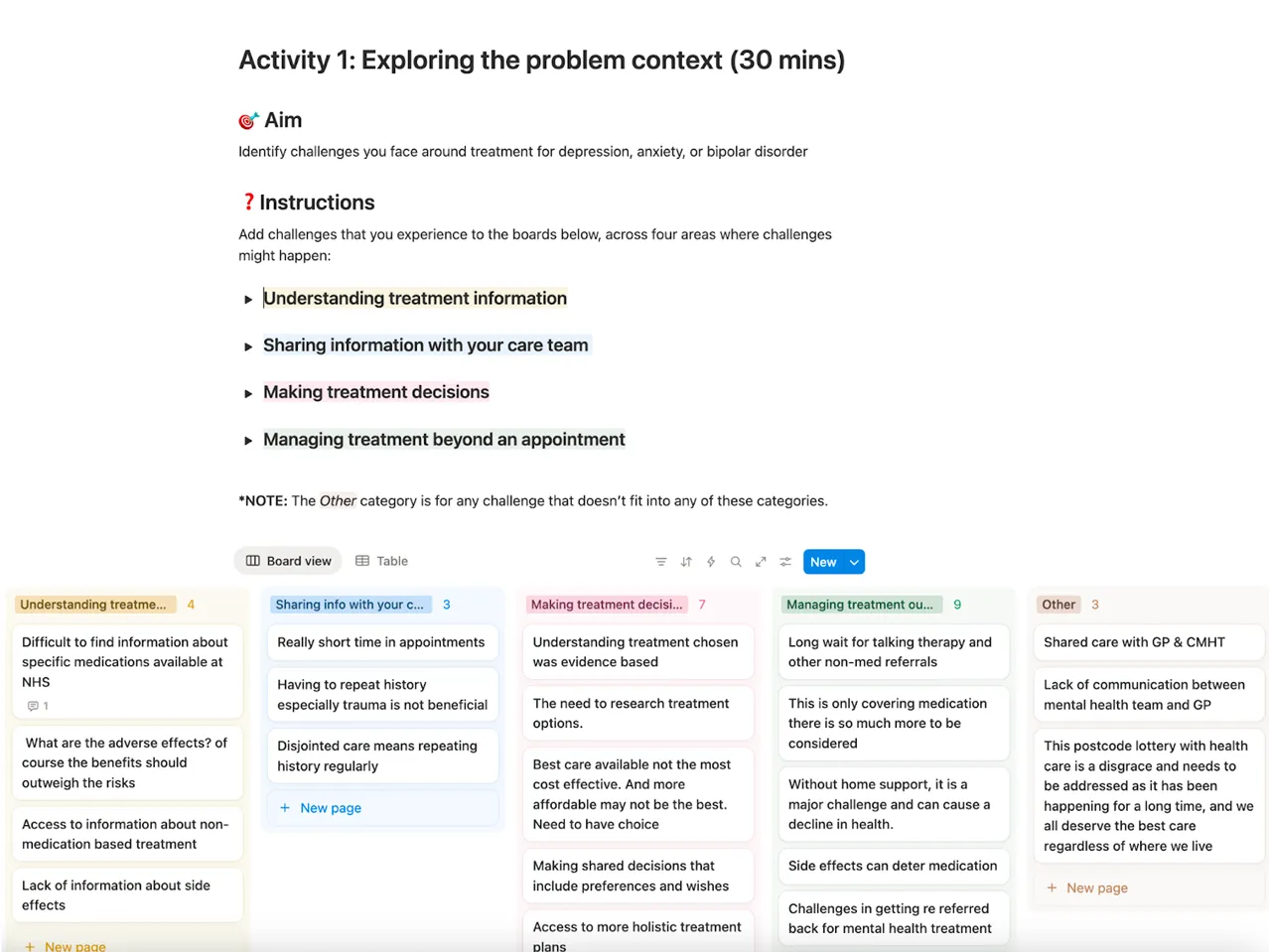
We ran a 90-minute online workshop with five people from Greater London who have lived experience of depression, anxiety, or bipolar disorder. The session explored the realities of managing these conditions within primary care, focusing on areas such as understanding treatment options, sharing information with clinicians, making decisions together, and managing care between appointments.
Participants then worked collaboratively to imagine how digital tools could help address the challenges they identified.
What we found
Participants highlighted several barriers that shape their experiences in primary care. Many described how difficult it is to access clear, reliable information about all available treatment options, which often leaves them feeling unsure of what choices exist or how to make sense of them. They also emphasised that non-medication approaches receive very little attention or support, despite being important to many people’s recovery. A recurring theme was the feeling that their own preferences, needs, and lived experience are not always taken seriously during treatment decisions, which can undermine trust and engagement.
Beyond individual interactions, participants pointed to broader system pressures that affect their care. Long waiting times and fragmented services often mean being passed between teams while having to repeatedly explain their history, which can be exhausting and discouraging. These gaps make it difficult to sustain continuity and momentum in care.
When imagining solutions, participants expressed a strong desire for tools that help them become more informed and confident about their treatment options. They suggested that collecting key information before appointments, including expectations and preferences, could help make shared decision-making more meaningful. They also saw value in digital services that could expand access to mental-health support between appointments, such as short-term guidance or liaison-style support while waiting for specialist care.